Meme coin trading, five rules that separate a plan from a lottery ticket
Need articles like this for your video? They help promote it on YouTube and Google — order them in the Telegram bot @sat_sit_bot. Articles with your video embedded are written and posted by the bot itself — on popular topical sites (no ads). Try it free: 50 articles on us.
· based on the channel rasmr
Key takeaways
- Meme coins are driven by attention and liquidity, not by cash flow or earnings — price follows narrative and order flow.
- Most beginner losses come from oversized positions, boredom trading and buying green candles after the move already happened.
- Consolidation before a breakout is the lowest-risk entry zone; chasing a vertical candle is the highest-risk one.
- Thin liquidity means slippage and exit problems: a token can look profitable on paper and still be unsellable at size.
- An exit plan written before entry — target, invalidation, time stop — is the only defence against holding a bag to zero.
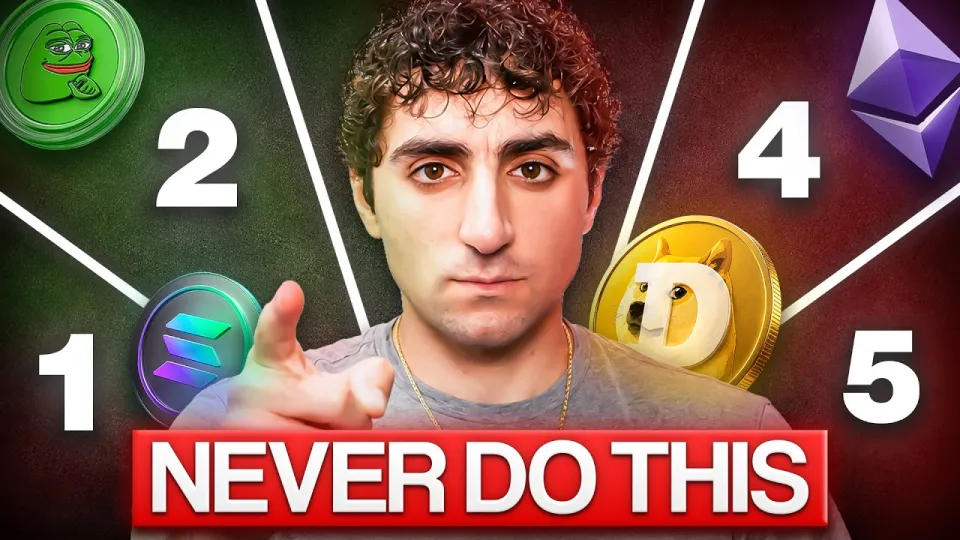
A meme coin is a cryptocurrency whose value rests almost entirely on community attention, narrative and liquidity rather than on revenue, cash flow or a product. That makes trading them a discipline problem more than an analysis problem: the same five mistakes — oversized bets, boredom trading, chasing green candles, ignoring liquidity and trading without an exit plan — account for most of the damage. The breakdown below follows the lessons in rasmr's video «5 Things I Wish I Knew Before Trading Memecoins (Learn From My Mistakes)», and if you want to trade alongside the channel's setup, you can register on fomo via rasmr's referral link.
What a meme coin actually is and why it behaves differently
A meme coin has no intrinsic valuation model, so standard fundamental analysis does not apply. There is no discounted cash flow, no earnings multiple and no roadmap that can be checked against delivery — the price is a function of how many people are paying attention and how much money is willing to sit on the bid at any moment.
That produces three practical consequences:
- Narrative moves faster than fundamentals. A single influencer post, a listing rumour or a TikTok trend can reprice a token by hundreds of percent within hours, and the same attention can vanish just as quickly.
- Liquidity is the real risk metric. A token with a $200k liquidity pool cannot absorb a $20k sell without collapsing the price. Market cap on a dashboard means nothing if the pool is thin.
- Supply concentration matters. If a handful of wallets hold most of the float, they can exit into your buy. Checking holder distribution before entry is basic hygiene, not paranoia.
Treat every meme coin as a short-lived attention trade with a defined risk budget, not as an investment you can forget about for a year.
Position sizing: the mistake that ends accounts
The most common reason new traders blow up is not bad picks — it is betting too much on any single pick. A meme coin can go to zero, and it can do so in minutes, so the size of a position must assume total loss is a realistic outcome rather than a tail scenario.
A workable framework:
- Cap single-token exposure. Many experienced traders keep any one meme position at 1–5% of the portfolio, with the total meme allocation capped separately from the rest of the book.
- Size from the stop, not from conviction. Decide where the trade is wrong, measure the distance to that level, and let that distance determine size — not how excited you are.
- Never add to a loser because it is «cheap now». Averaging down on a token with no floor is how small losses become account-ending ones.
- Keep a cash buffer. If every dollar is deployed, you cannot take the next setup, and you will be tempted to sell a good position early to fund a bad one.
Patience beats activity: waiting for consolidation
Boredom is expensive: many traders lose money simply because they feel obliged to be in a trade every day. The viewer feedback under the video makes the same point from the other side — one trader describes losing an entire portfolio during a bear market mainly because they were trading out of boredom, and calls the whole activity a patience game.
In practice, patience means:
- Wait for a base. A token that has stopped falling and is ranging in a tight band is building a reference point; that range gives you a clear invalidation level below it.
- Buy strength inside the range, not after the breakout candle. Entering during consolidation gives a defined stop; entering after a vertical move gives you someone else's exit liquidity.
- Accept that most days have no trade. Sitting out is a position, and it costs nothing.
- Use a confirmation rule. If you need news or volume to confirm an entry, write down what that confirmation looks like in advance — otherwise every candle will look like a signal.
Liquidity, slippage and the exit you cannot take
A profitable chart is not the same as a profitable exit. Before buying any meme coin, check whether you could actually sell your intended size without destroying the price.
Practical checks:
- Pool depth versus your size. If your position is a meaningful fraction of the liquidity pool, you are the exit liquidity for earlier buyers.
- Slippage tolerance. Setting a very high slippage tolerance to force a fill is how traders get sandwiched and pay far more than the quoted price.
- Contract and holder checks. Verify the contract address from an official source, look at holder concentration, and check whether trading can be paused or taxes changed by the deployer.
- Volume quality. Wash trading inflates volume on many new launches; steady organic volume across many wallets is a better sign than a single spike.
Writing the exit before the entry
Every meme coin trade needs three numbers decided in advance: a target, an invalidation level and a time limit. Without them, a winner turns into a bag and a loser turns into a long-term holding by default.
A simple exit plan:
- Scale out on the way up. Taking partial profit removes the pressure to call the exact top, which nobody can do consistently.
- Move the stop to break-even after the first partial. This converts a good trade into a free option on further upside.
- Respect the invalidation level. If the thesis was a range breakout and price is back inside the range, the thesis is wrong — exit rather than renegotiate.
- Use a time stop. Meme narratives decay; if the token has done nothing for your defined window, the capital is better deployed elsewhere.
Common questions new meme coin traders ask
Beginners tend to converge on the same handful of doubts: when exactly to buy during consolidation, whether to wait for news confirmation, how much of a portfolio a single token deserves, and how to recover after a first month full of mistakes. The short answers: buy inside a defined range with a stop below it rather than after a breakout candle; treat news as a reason to reduce size, not to increase it, because by the time news is public the move is often priced; cap any single position at a few percent of the portfolio; and after a losing start, cut size and trade fewer setups until the process — not the P&L — is stable again.
The recurring theme in viewer reactions is that the honest, unglamorous advice is the useful part: fewer trades, smaller size, clearer rules. That is also the fastest way to stop donating to faster traders.
Bottom line
Meme coin trading rewards risk control far more than prediction, and the five lessons above — sizing, patience, liquidity checks, a written exit and refusing to trade out of boredom — are what separate a repeatable process from gambling. The channel rasmr built this breakdown around is worth following for that mindset: it presents meme trading as a discipline with rules rather than a hunt for the next hundred-x. If you want to put the framework into practice, sign up on fomo through rasmr's referral link and start with position sizes small enough that a total loss on any one token changes nothing about your life.
Source: 5 Things I Wish I Knew Before Trading Memecoins (Learn From My Mistakes) · Markdown version
Questions & answers
When should I buy a meme coin during consolidation?
The lowest-risk entry is inside a defined range, close to the lower boundary, with a stop just below the range low. That gives you a clear invalidation point and a measurable risk. Buying after a vertical breakout candle means paying the worst price with the widest stop.
Should I wait for news to confirm an entry?
News is usually a reason to reduce size, not increase it, because by the time an announcement is public the move is often already priced. If you do use confirmation, define in advance what it looks like — volume expansion, a reclaim of a level — so you are not rationalising every candle.
How much of my portfolio should one meme coin be?
Assume any single meme coin can go to zero, and size so that outcome is survivable. Many traders cap one position at 1–5% of the portfolio and keep a separate cap on total meme exposure, sizing from the distance to the stop rather than from conviction.
I lost money in my first month of meme coin trading — what now?
Cut position size and reduce the number of setups you trade until the process is stable, rather than trying to win the money back quickly. Review whether the losses came from oversized bets, boredom trading or missing exits, and fix that one habit first.